

|

|
| There isn’t much between Kaikoura and Christchurch except for a few stretches of seal covered beach. It’s nice, but we had a tough time finding a campsite. Luckily, our handy dandy atlas had a tent icon at Hurunui River Mouth, just south of Cheviot, so we headed to where the river meets the sea.
The lovely bomb shelter-esque bathrooms and deserted camp sites were intimidating at first, but the sign that said “This camp is run on the honesty of campers” and the sunny weather decided it for us. We stayed and it was the best idea ever. Turns out the camping fee was only $4 per site – not per person, like most campsites in NZ – and the creepy bathroom had a mirror, two nice sinks, and full-on flush toilets…simple pleasures these days. There were even a few apple trees with apples still on em, not that we ever want to eat apples again. After night two, we went on a sweet barefoot hike along the river. The mud squishing through our toes was disgusting at first, but then we noticed thousands of bubbles coming from under the water and curiosity had us excitedly digging in the mud to find the source. We never could figure out what was creating the bubbles - maybe oysters or geothermal activity - but in hindsight we’re glad our digging didn’t lead to a geyser exploding in our face. Even though a few other campers came the second night and the mud ended up smelling pretty bad, we’ll remember Hurunui River as our own private getaway. We enjoyed a full moon, cooked some good dinner, and got some much needed quiet time on New Zealand’s beautiful East Coast. Two thumbs up. |
|

|

|

|

|
Showing posts with label camping. Show all posts
Showing posts with label camping. Show all posts
Sunday, May 30, 2010
Hurunui Campsite

Tuesday, May 18, 2010
Hiking the Abel Tasman National Park

|

|
| Carolyn and I loved the kayaking portion of the Abel Tasman, and while we would have been happy to just hop on a water taxi back to town, we decided to explore the trail back on foot.
We started Day 3 at Onetahuti where we dropped off our kayaks the night before. The hiking trail actually goes further north past Onetahuti (the entire thing is 52 km), but spending six or seven days in the wilderness seemed a little out of our league. We’re a bit lazy if you hadn’t noticed, and generally unprepared, so we skipped the most northern portion of the park and headed south. The trail hugs the same golden sand beaches and granite rock formations we had seen from the kayak, but it was fun to see it all from a different perspective. Right off the bat we plunged into rich forest environs filled with birdsong (thanks again to the Birdsong Trust). I whistled my face off to the fantails that filled the tree branches, and within a few minutes we had a pretty good crowd of birds hopping from tree to tree along with us. They are incredibly social birds, and will dance for anyone that seems interested. They also like to swoop right in front of your face. It's a jolting experience. A lot of the trail is nestled in the trees with frequent scenic lookouts, keeping you fairly cool as you wind your way up and down gradual (and some not so gradual) ascents of the granite cliffs. We took the occasional break for photo-ops and snacks, but for the most part the hike is extremely do-able. I wore hiking boots, but Care did the whole thing in Chacos. A unique feature of this particular Great Walk is the existence of four tidal crossings at Bark Bay, Torrent Bay, Onetahuti Bay, and Awaroa. The tide depth in the park can fluctuate by as much as 5.2 meters, meaning that at high tide, some of the trails are submerged. Low tide and high tide are generally 6 hours apart, so most of the crossings are only passable during a 4-hour window, 2 hours before and after low tide. Get a tidal chart from the Nelson or Motueka i-site and do some planning ahead of time, or else you’ll have to:
As disgruntled as we were about our early start at Torrent Bay on Day 4, the stillness of the morning was pristine. The best part is when the track emerges from the tree line to expose amazing views of the park’s bays and islands. One of the most stunning views is from the peak atop Anchorage Bay, looking north at dawn. New Zealand is called “Aotearoa” in Maori which literally means “land of the long white cloud”, and Care and I have been lucky to see an almost non-stop parade of epic cloudy sunsets. The sun lights row upon row of clouds on fire each evening…probably every morning too but we catch wayyyy fewer of those. It’s always amazing, but the Abel Tasman was exceptional. We bought a tent just for this trip, and in retrospect, I wish we had bought a small cooker (cookers are not provided in the Abel Tasman DOC huts or campsites). Cereal, PB&J sandwiches, and cold pasta held us over for four days, but the first thing we did after the hike was inhale five pizzas at 623 Bar’s all-you-can-eat pizza night. Ignoring a few sandfly issues (don’t forget your DEET!), it’s easy to see why the Abel Tasman National Park is the most visited park in New Zealand. Whether it’s by land or sea, everyone can easily and affordably enjoy the pristine beauty of the natural surroundings. We definitely recommend the kayak/hike combo. It’s a sweet taste of both worlds. |
|
|
There's a sweet photo album here, but it looks like your device doesn't support Flash.
No worries! Simply view the web album on Picasa. |
|
Friday, May 14, 2010
Possums vs. Birds

|

|
|||
| The story of our third day in the Abel Tasman actually begins in the middle of the night. Scrounging and snuffling sounds outside the tent woke us up (and by “us” I mean Carolyn).
“What’s that noise?” she whispers. “New Zealand doesn’t have any bears, right? RIGHT?” she pleads. “I don’t think so…” I mumble (in my sleep). Then we remembered what it does have...possums. |
||||

|

|
|||
| Not to be confused with the North American opossum (on the left), the New Zealand brushtail possum is less rat-like and more creepy, furry, lemur-like. Here’s some back-story to help explain the possums’ impact on New Zealand:
When New Zealand split from Australia and other parts of ancient Gondwanaland, the small size of the North and South Islands couldn’t support large predators, leading to unique bird evolution. Without the fear of predation, many birds shed their ability to fly and developed thicker, solid bones and sturdy legs to carry them around the ground in search of food. The most extreme example is the moa, which stood at over two meters tall and was similar to large land birds in other parts of the world like ostriches and the “terror birds” of South America. Sadly, early Maori tribes hunted the moa to extinction around 1500 AD. |
||||
|
||||
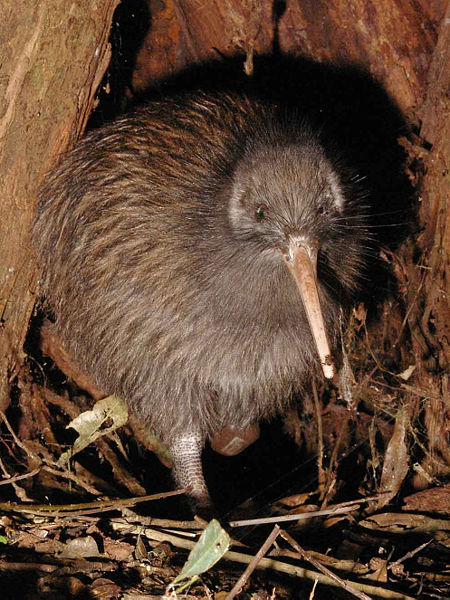
| Another iconic New Zealand bird is the flightless kiwi. These birds have thick leg bones with marrow in them (in contrast to light hollow bones of other birds), and the tiny vestigial wings hidden at their sides are essentially useless.
The pukeko is a good example of an in-between bird. While still technically capable of flight, its primary response to danger is to run on its speedy, sturdy legs. These bright blue birds are everywhere on the North Island, and when they get startled crossing the road, it’s hilarious to watch them try to run/fly away with their small wings and big, awkward, dangling feet. They can barely clear paddock fences. These bird populations lived in relative safety for millions of years, but the introduction of new predators like possums, stoats (weasels), and rats to the ancient New Zealand ecosystem has led to a rapid decline in native bird populations. The possum was first introduced to New Zealand by Europeans in the 1800’s to create a fur trading industry, and it bums me out that their greed and thoughtlessness is destroying the present diversity. Possums target the eggs and young of endangered birds like the kiwi and some penguin species, as well as eggs of the now endangered reptile, the tuatara. The response by the government has taken years, but now the verdict is clear - birds get to stay and possums must go. |
||||
|
||||
| At first it struck me as odd that possum-hunting is a patriotic duty for New Zealanders. It’s actually disturbing how many possum carcasses I see on the road. However, after our trek through the Abel Tasman National Park, I’m beginning to understand. The native animals are so disadvantaged by these new predators that they depend on a certain amount of human protection, enter the Abel Tasman Birdsong Trust.
I looked into it, and there are approximately 30 million possums in New Zealand. That’s how many kiwis used to roam the forests, but now the kiwi population hovers in the low thousands. The fact that kiwis even still exist is only due to extensive efforts by the New Zealand government to establish island sanctuaries and breeding programs. Bottom line, possums are killing the rare and wonderful wildlife that can only be found in New Zealand. Ok, now back to our second night in the Abel Tasman Park. When we woke up the next morning, we found that the three tents next to us at the Onetahuti Bay campsite had holes chewed through the sides and any food hidden inside had been snacked on by a sneaky possum. The only reason Care and I escaped unscathed was because we didn’t want trash in our tent so we tied it up and left it outside. The possum tore a hole in that and dined on a banana peel, ignoring our tent and the precious food supply inside. We’re smart as. Later that morning we discovered that justice had been served – the body of a possum hung limp from a trap only a few feet from our tent. The Birdsong Trust sets hundreds of traps along the trail to protect birds that nest near the coast. It was sad to see an animal get killed for doing what nature dictates it to do – eat – but it’s also nice to see that the native bird populations stand a chance. |
||||

|

|
|||
| I hate that it’s necessary to hunt down and kill the possums because I think they are actually really awesome animals. It’s a sad state of affairs here; the only way to preserve the shrinking diversity is to slaughter innocent animals just trying to survive themselves.
Anyone looking to support the preservation effort and be stylish too can buy “merinomink” or “ecopossum” garments, which are made from a super soft blend of sheep wool and possum fur. Proceeds often go toward groups like the Birdsong Trust, and these groups are making progress - there were 70 million possums during the 1980’s (more than twice the number that exist today). Some shops even sell novelty items like possum fur nipple warmers. Seriously guys, New Zealand is a weird place. So…sorry about the possum rant, but it’s an important topic to all Kiwis (both the birds and the humans). The next post will be about our 2-day hike back to Marahau. Promise. |
||||




Wednesday, May 12, 2010
Kayaking the Abel Tasman National Park

|

|
| After three brutal days picking apples, Care and I decided it was time for a well earned vacation, so we headed north to Marahau, the gateway to New Zealand’s most popular national park – Abel Tasman.
Trips in the Tasman usually vary between one and seven days, though most people spend just one or two days hiking, kayaking, or just cruising on a water taxi. We opted for a four-day combo adventure – kayaking north and then hiking back south. FYI, campsites have to be booked ahead of time, and reservations for heaps of different kayak companies can be made for free at the Nelson or Motueka i-sites. We chose Kahu Kayaks because they were the cheapest, and they turned out to be a really awesome, friendly company too. A bunch of factors such as wind direction, weather, water taxi schedules, and most importantly the high tide charts should play a part when planning your itinerary. We had to decide which was the better option – kayaking north against the wind and then hiking back south, or taking a water taxi up and kayaking south. So after thinking about it for like five minutes, we chose to kayak first…cuz we felt like it. We ran into a few bits of chop and wind, but all in all the two days kayaking were amazing. We explored Fisherman’s and Adele Islands – homes to seals and penguins – and had lunch on a secluded golden sand beach that can only be reached from the water. We shot some “rapids” (which just means we got a little too close to the rocks) and splashed around for a while. Our first night’s stay in Anchorage Bay was a bit sandfly-infested, but the great facilities made it a worthy stop. Our second day in the kayak was a lot more steady (Carolyn steered). I heard a rumor that she’s used to spending time in a boat, but I can’t remember where… We lucked out with a little blue penguin sighting early in the morning – apparently they’re really shy and spend most of their time way out in the ocean fishing, so we were really excited to see one float past us in the bay. In the afternoon after a solid paddle north, we passed “Foul Point” where we tried not to capsize so we could investigate a lesser known seal colony at the northern edge of the Park. Our efforts were rewarded when a few of the males danced in the water for us and played hide and seek under our kayak. We also spotted some 4-month old baby seals on the rocks, but Care was disappointed that she couldn't convince them to jump into the kayak and ride home with us. Day two ended with another secluded beach picnic and a mellow paddle into Onetahuti Bay Camp. There Kahu Kayaks picked up our kayaks and garbage and dropped off our backpacks, all at no extra charge, letting us prepare for our two day hike back to the start of the trail. But more on that adventure next time… |
|
|
"Seal Sighting" - a comic by Shawn Forno

|
|
There's a sweet photo album here, but it looks like your device doesn't support Flash.
No worries! Simply view the web album on Picasa. |
|
|||||

Monday, April 26, 2010
The Elusive Kiwi and Pelorus Bridge

|

|
|
Our first decision on the South Island was to vote against heading north into the Queen Charlotte Sound, even though it’s highly recommended. The tours are pricey, the roads are unpaved, and while the hiking is supposed to be epic, we’re more stoked to hike/kayak the Abel Tasman National Park – a five day excursion. We don’t want to peak before we get to the Tasman. So we headed west.
On the way to Marahau (the entry point for the Abel Tasman Park), we found a great little DOC campsite called Pelorus Bridge. I’m a big fan of freedom camping, but this Serviced DOC campsite is one that I can highly recommend. The facilities at Serviced sites are a lot nicer than the Basic or Standard DOC sites and traditionally feature gas cookers, flush toilets, ample space for camping, excellent trails through the woods, and a hot shower – so worth ten bucks a night. We planned on hiking down to the river, but as I was shoveling down some cocoa pops, nature came to us. Out of nowhere Carolyn freaked out behind the van. She squealed, “KIWI!! I SEE A BABY KIWI!!! BLAAAARGGGRAAAAAGGGGRRGRH KIWIIIIIIIIIIII!!!!!!!!!!!!!!!!” I dove out of the van to see the elusive bird, confused that it was out during the daytime (they’re nocturnal) and saw instead a little brown bird with huge feet. It resembled a kiwi, but didn’t look quite right. The beak was too short and the talons on its feet were gargatumongahugical. Much to our dismay we found out the bird wasn’t a kiwi – it was another flightless bird, the weka. It didn’t matter though because it was fun to feed the curious family. Pelorus Bridge provided us with a nice hot shower, our first kiwi false alarm, and our first weka sighting. Not too shabby. |
|
|
|||||

|

|
|
"Kiwi Sighting" - a comic by Shawn Forno

|
|
Subscribe to:
Posts (Atom)

 Posts
Posts


